

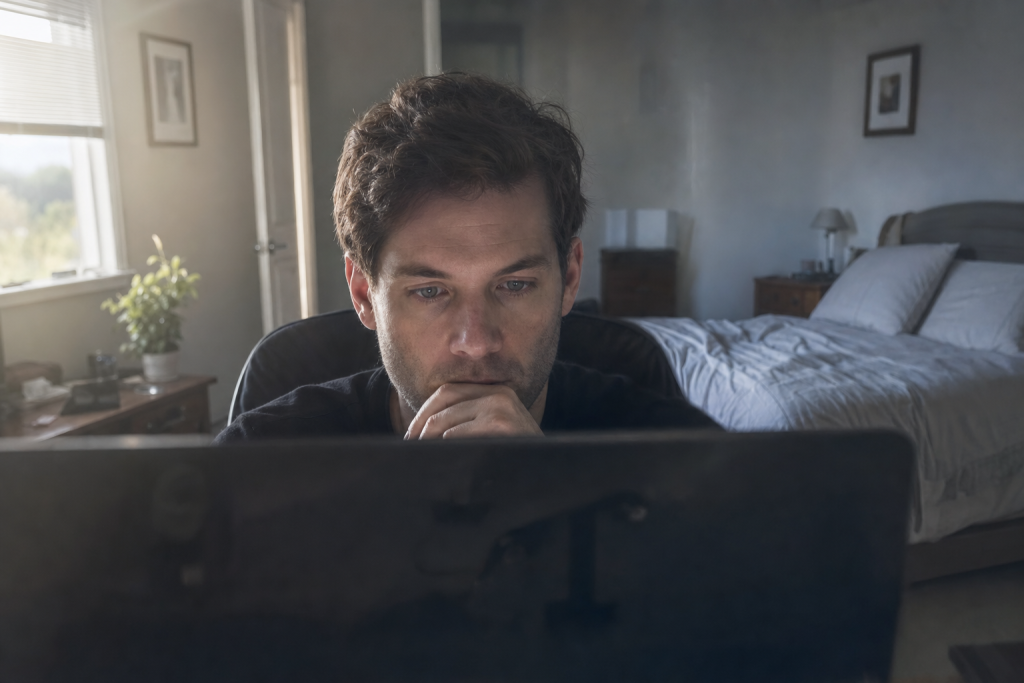
Pornography Rewires Your Brain when repeated viewing trains the reward system to expect quick, intense sexual stimulation on demand. For people who feel stuck in compulsive porn use, this can affect mood, focus, relationships, confidence, and sexual health. Hypnosis Sudbury offers private online support for people across Canada who want help understanding the deeper emotional patterns behind compulsive behaviours. This does not mean every person who watches porn has a problem. It means that when use feels hard to control, causes distress, or replaces real connection, it may be time to look at what is happening in the brain and in daily life.
Table of Contents
- A Brief History: From Hidden Media to Instant Access
- How Pornography Rewires Your Brain
- Current Trends in Pornography and the Brain
- Common Challenges with Compulsive Porn Use
- How to Begin Reversing the Pattern
- Future Prospects for Recovery and Sexual Health
- FAQ
- Conclusion
A Brief History: From Hidden Media to Instant Access
For most of history, sexual images were not available with a few taps on a phone. People had to seek out magazines, videos, or adult stores, which created natural limits around access. Today, high-speed internet has changed the picture completely. A person can move from one video to another in seconds, with endless novelty and little effort. This matters because the brain pays close attention to novelty, especially when it is tied to sex, excitement, and reward.
Think of the brain like a walking path through fresh snow. The first time you walk across it, the trail is light. If you walk the same path every day, it becomes deeper and easier to follow. That is a simple way to understand neuroplasticity, which means the brain can change and form stronger pathways based on repeated behaviour. With pornography and the brain, repeated patterns can make certain cues feel automatic, such as being alone, stressed, bored, rejected, angry, or tired.
How Pornography Rewires Your Brain
When people say Pornography Rewires Your Brain, they are usually talking about the reward system. The reward system is the part of the brain that helps us seek things linked to pleasure, survival, and relief. Dopamine is one key brain chemical involved in wanting, seeking, and motivation. It is often misunderstood as simply the “pleasure chemical,” but it is more about learning what to chase again. If porn becomes the fastest way to feel relief, escape pressure, or change mood, the brain may start treating it like a go-to solution.
This does not mean someone is weak or broken. It means the brain has learned a shortcut. Over time, some people report needing more extreme content, longer sessions, or more secrecy to get the same effect. Others notice less interest in real-life intimacy, lower motivation, or trouble being present with a partner. These experiences can affect sexual health, self-esteem, and trust in relationships. Research in this area is still developing, and not every study proves cause and effect, but the pattern is real enough that many people seek help for it.
Current Trends in Pornography and the Brain
One major trend is that younger people are often exposed to explicit material earlier than past generations. Smartphones, private browsing, social media, and short-form video culture have changed how quickly sexual content can appear. Another trend is the rise of what many people call porn addiction, even though experts do not all agree on that exact label. The World Health Organization includes compulsive sexual behaviour disorder in the ICD-11, but it classifies it as an impulse-control disorder rather than officially calling it an addiction.
That difference matters. Some people benefit from addiction recovery language because it helps them take the pattern seriously. Others feel more helped by talking about habits, trauma, attachment, anxiety, shame, or emotional regulation. A balanced view makes room for both. In real life, someone may stop drinking, gambling, or using drugs, then find themselves pulled into compulsive porn use, overeating, gaming, shopping, or constant screen use. The surface behaviour changes, but the emotional escape pattern may stay the same.
Common Challenges with Compulsive Porn Use
A common scenario might look like this: a man in his early 40s stops drinking and feels proud of that change, but months later he notices he is spending hours online at night. He tells himself it is not as bad as alcohol, yet he feels distant from his partner, tired at work, and ashamed the next morning. This is not about calling him a bad person. It is about noticing that the brain may have found a replacement behaviour for stress, loneliness, anger, or unresolved pain.
Shame can make the loop stronger. Guilt says, “I did something I do not feel good about.” Shame says, “There is something wrong with me.” That difference is important because shame often pushes people into hiding, and hiding can feed the behaviour. The F.E.A.R. Method, created by Gilles Brideau, M.A., a registered psychotherapist, certified hypnotist, and men’s recovery coach with 34 years of experience in mental health and addictions, is one private recovery option for men who have stopped one harmful behaviour but keep switching to another. It explores patterns beneath the behaviour without judgment, while also building tools for emotional control, identity, and healthier choices.
How to Begin Reversing the Pattern
Change often starts with slowing the pattern down. Instead of only asking, “How do I stop?” it may help to ask, “What happens right before I start?” Common triggers include stress, rejection, boredom, conflict, loneliness, fatigue, alcohol use, and late-night phone scrolling. Write down the time, place, mood, and thought that shows up before the urge. This turns an automatic loop into something you can study.
Practical steps can help. Keep devices out of the bedroom. Use website blockers as a speed bump, not as the whole plan. Replace late-night isolation with a planned activity, such as a walk, shower, breathing exercise, journaling, or calling a trusted person. If anxiety or anger is part of the pattern, learn grounding tools that calm the body before making a choice. If there is trauma, depression, relationship conflict, or thoughts of self-harm, professional support is important; if there is immediate danger, contact emergency services or a crisis line in your area.
The F.E.A.R. Method uses the word F.E.A.R. in two ways. F*ck Everything And Run describes escaping pain through substances, porn, gambling, anger, work, food, or distraction. Face Everything And Recover describes turning toward the deeper pain with support. Its four stages are Foundation, Empowerment, Awakening, and Rebirth. In everyday terms, that means understanding the pattern, building tools, exploring deeper emotional roots, and rebuilding identity and direction.
Future Prospects for Recovery and Sexual Health
The future of support for compulsive porn use will likely include a mix of methods. Some people benefit from counselling, peer support, couples therapy, medical care, medication for related concerns, faith-based support, or structured recovery programs. Others need private one-on-one work because group settings do not feel safe or personal enough. No single method is right for everyone. The best plan is the one that is honest, respectful, and realistic enough to keep using.
Technology may also play a role. Apps can track urges, block content, or remind people of values and goals. At the same time, technology alone cannot replace emotional healing, real connection, and accountability. Future recovery conversations will likely focus more on the whole person, not just the behaviour. That includes sexual health, nervous system regulation, relationship repair, self-respect, and learning how to handle pain without escaping into another compulsive pattern.
FAQ
Repeated pornography use may affect the brain’s reward pathways, with research suggesting it can be associated with changes in neural plasticity linked to intense stimulation of the reward system.
Q&A
Question: Does watching pornography always mean someone has porn addiction?
Answer: No. Not everyone who watches pornography has porn addiction or a mental health concern. It becomes more concerning when the person feels unable to stop, keeps using despite harm, hides it, loses interest in real-life intimacy, or uses it mainly to escape emotional pain.
Question: Can the brain recover from compulsive porn use?
Answer: The brain can change through new habits, support, emotional regulation, and healthier coping tools. Recovery is not always quick or perfect, and results vary from person to person. Many people do better when they combine practical boundaries with counselling, peer support, relationship work, or a private recovery program.
To learn more and view our other blogs, click here,
Conclusion
Pornography can become more than a private habit when it starts shaping mood, motivation, relationships, and sexual health. The key is not shame, panic, or harsh self-judgment. The key is understanding the loop and building a better response. When compulsive porn use is tied to stress, loneliness, old pain, or replacement behaviours, deeper support may be needed. Different people may need different paths, and combining approaches is often helpful. With patience, honesty, and the right support, it is possible to create new patterns that feel more connected, grounded, and aligned with the life a person wants to build.
The photos used in this blog are for demonstration purposes only.